Poland
Alan Suslow Visit to Dukla 2026
On Wednesday August 12, 2026 I met a tour guide Phil had found online and we drove almost 3 hours from Krakow to the town of Dukla. This was the town where my grandfather Jack was born. He left there in 1903 at the age of 6 and my hope was to gain some insight into my ancestry. My guide, Eliza, picked me up at my hotel in Krakow. She talked most of the way, sharing various history and current conditions in Poland. The scenery along the drive was unspectacular, though quite green. Homes and other buildings appeared well-maintained. I noticed that construction in Poland appears to be of good quality.
Finally we arrived in Dukla, which today has a population of about 2,000. Back in 1900 the population was just over 3,000, of which about 2,400 were Jewish. None of the Jews owned land, though they had shops or worked in the local oil business. There were many such shtetls in Poland and of all of the countries in Europe it seems that Poland was the most welcoming or at least the most tolerant of Jews.
We met Jacek who has made a business of assisting foreigners researching their ancestry. In Dukla, which back in the day was a shtetl, Jacek assists modern Jews researching their ancestry. Although Jacek, like most Polish people, is Catholic, he has thoroughly researched his town's Jewish history and the 19th-century cultural life of these shtetls. He has records of births, marriages and deaths dating back to the 19th century. He helps maintain the town's Jewish cemetery. (See photos below). The walls in his apartment are filled with Hebrew writings and Jewish art. Unfortunately he spoke no English, so Eliza was my translator for the day. Jacek's daughter majored in Jewish Studies in Krakow, so she was also helpful in explaining the history and culture of these shtetls and she gave us a tour of the local museum. Unfortunately she also spoke no English. At one point we went to Jacek's very small apartment (from the Soviet era, maybe 35 meters). He served cabbage soup and rolled cabbbage and we looked at old record books, hoping to find the name of Jacob Pinsler or his parents. We looked carefully through several hand-written books with records of births, deaths and marriages. There were no Pinslers in any of books, though plenty of Pinskers, so we suspect that Jack's birth name was Pinsker then was changed upon entering the United States. Neither Jack (Jacob), nor his parents Rachel Zimet and Maximillian were in any of those books. It turns out that records from this period were later destroyed in a fire, long before digitalization.
In the late afternoon we went back to the Jewish cemetery where a dozen or so locals gathered for a short ceremony. I was told they do this twice annually. A few of the men wore yarmulkes despite the fact that all were Catholic. Some of the participants had recent ancestors who had helped to hide Jews during the Nazi occupation. Jacek's son-in-law led the ceremony in Hebrew, which he learned while living in Israel for 12 years as a construction worker. The purpose of the ceremony was to remember the Jews of Dukla. I was deeply touched by this brief ceremony in which a small town that is 100% Catholic takes the time to gather twice yearly to remember a Jewish community that lived there nearly 100 years ago. I wondered how my own ancestors would have felt seeing that the memory of their presence was still honored long after they were gone.
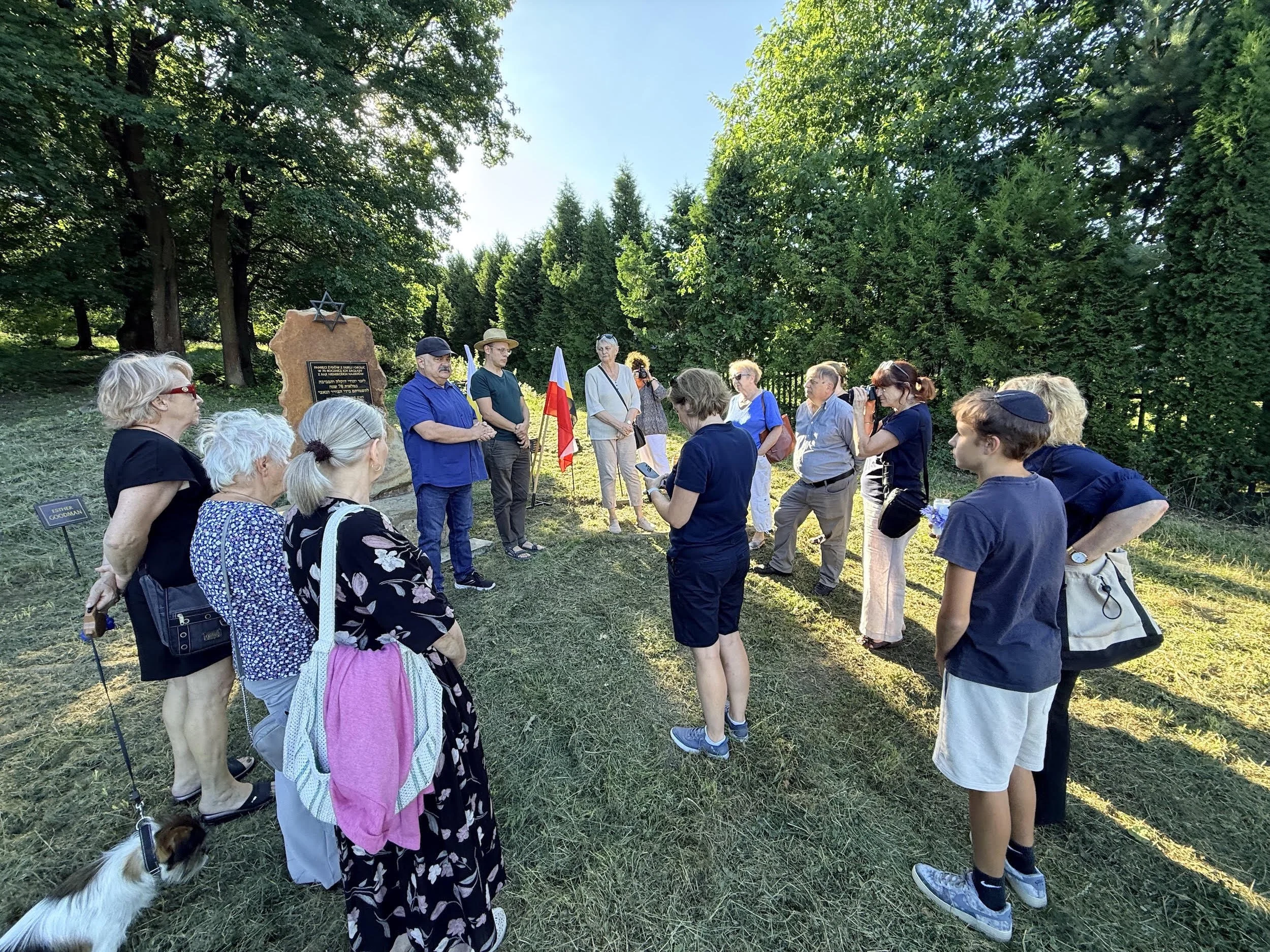
A dozen or so local residents in Dukla on August 12, 2026 gather at the Jewish cemetery for a brief ceremony in remembrance of the Jews who lived there for more than two centuries until the Nazi invasion.
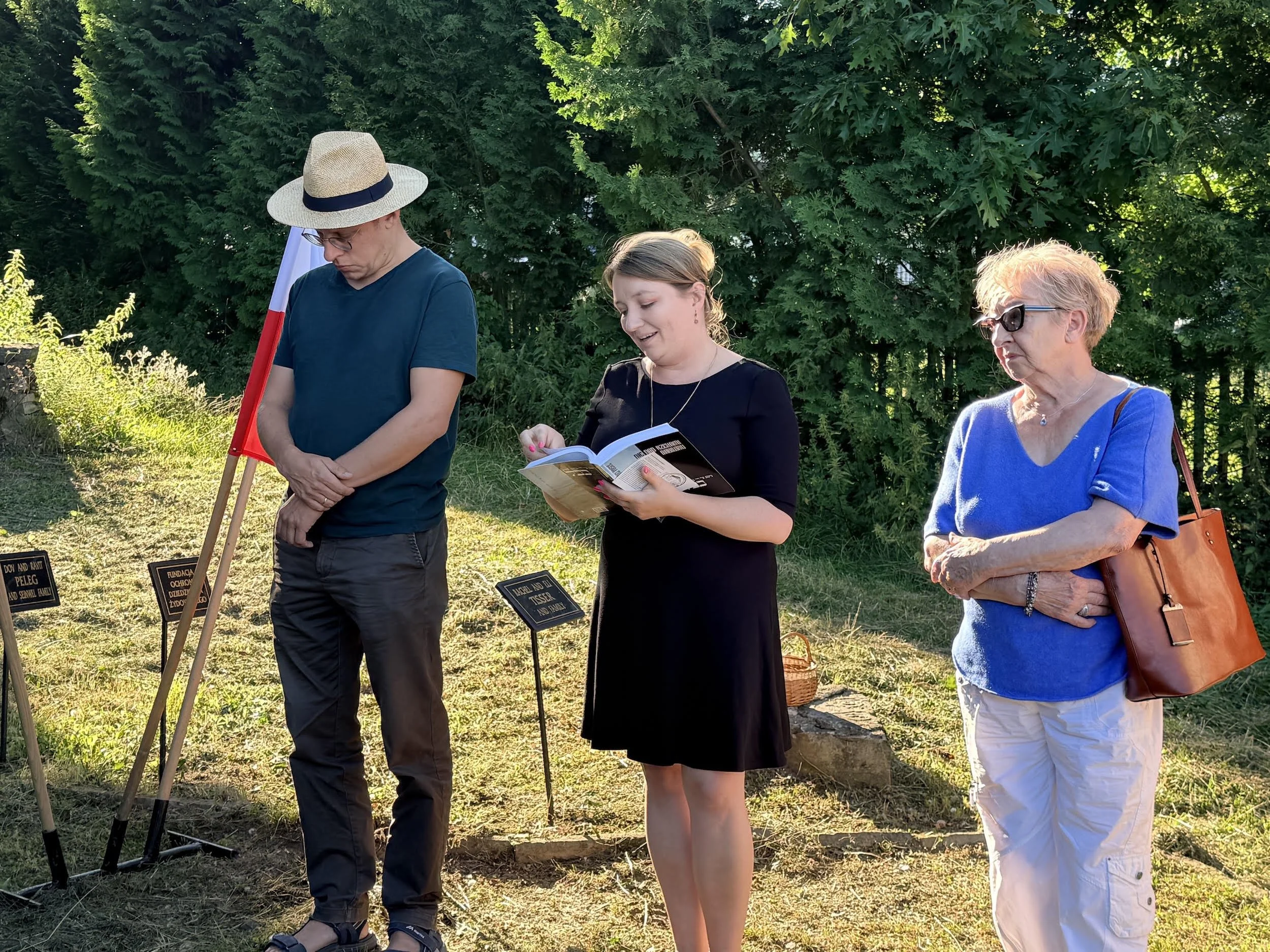
Gentleman in the hat is Jacek's son-in-law. He conducted the ceremony in Hebrew including chanting and prayer.
The young woman next to him is his wife (Jacek's daughter) who majored in Jewish studies.
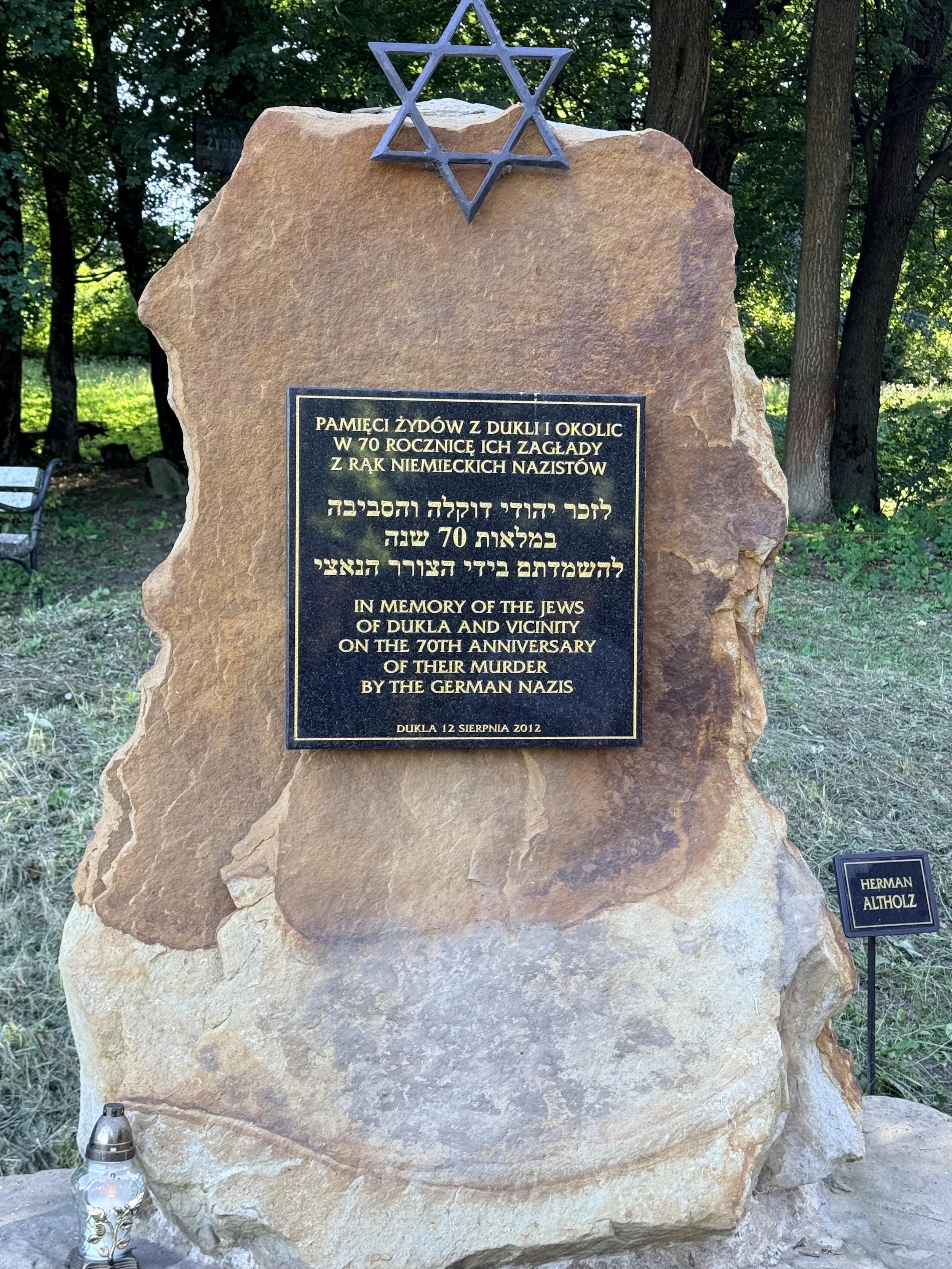
Memorial plaque near the entrance to the cemetery commemorating the Nazi invasion in Poland.
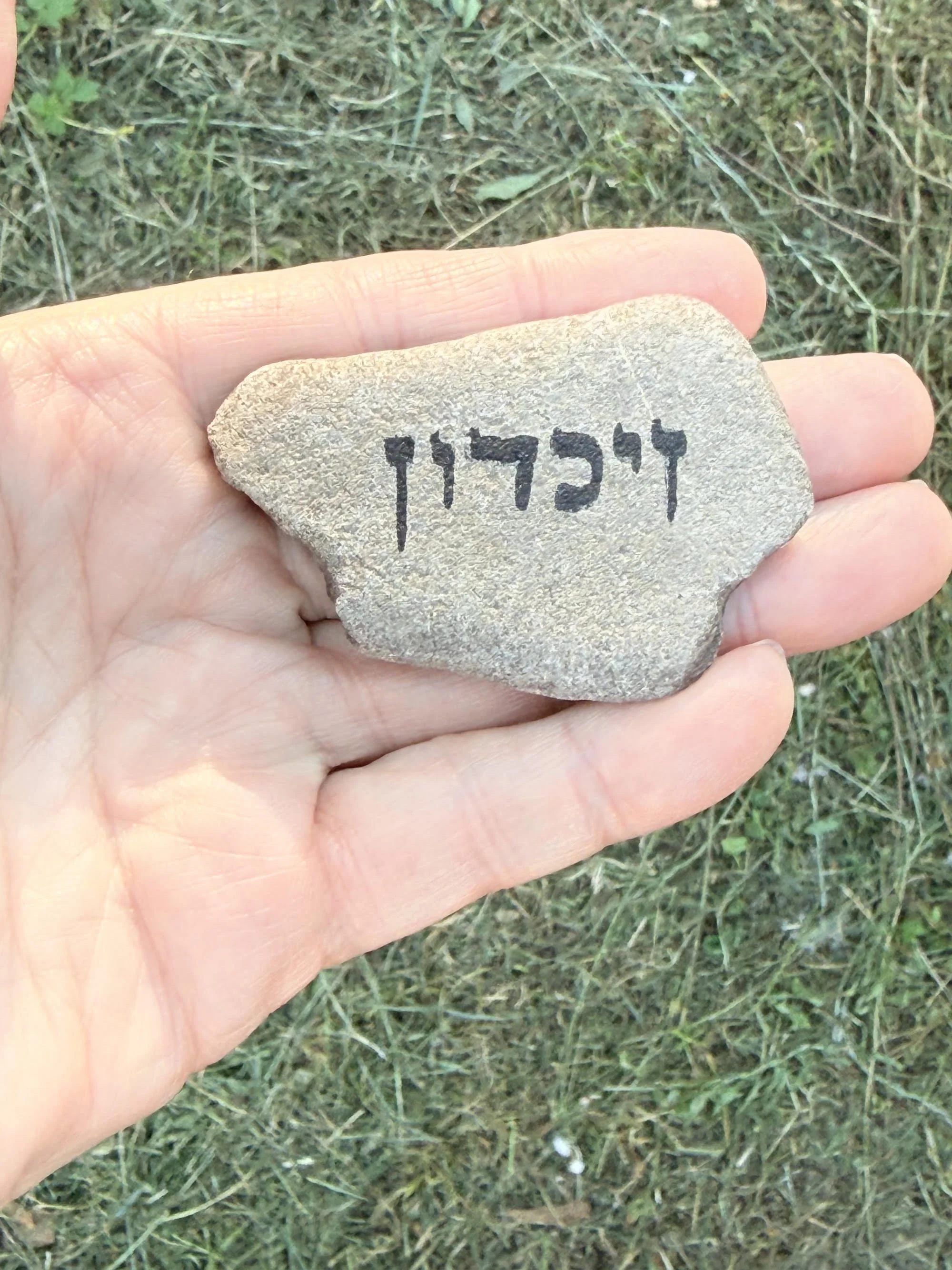
Jacek's daughter inscribed small stones with Hebrew words and gave one to each person attending the ceremony.